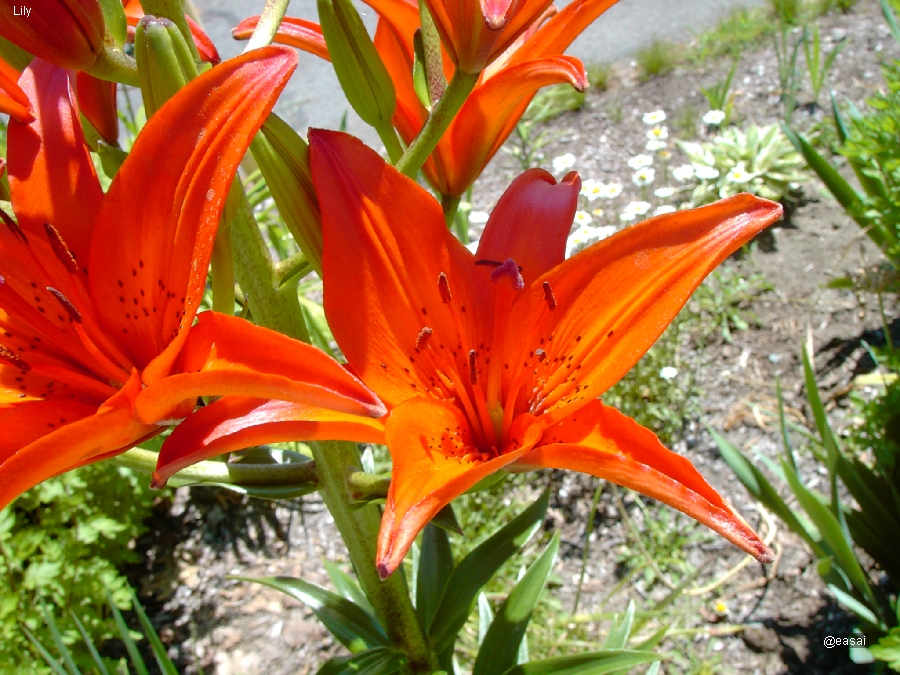
The photo shows deep red Lilium sp. flowers. Liliaceae flowers have six distinct thick and massive tepals, six stamens, basifixed or dorsifixed conspicuous large anthers, and three chambered ovary. It is a monocot and the leaves have parallel veins. Lilium is a tall and single stemmed plant with shiny simple entire lanceorate leaves.
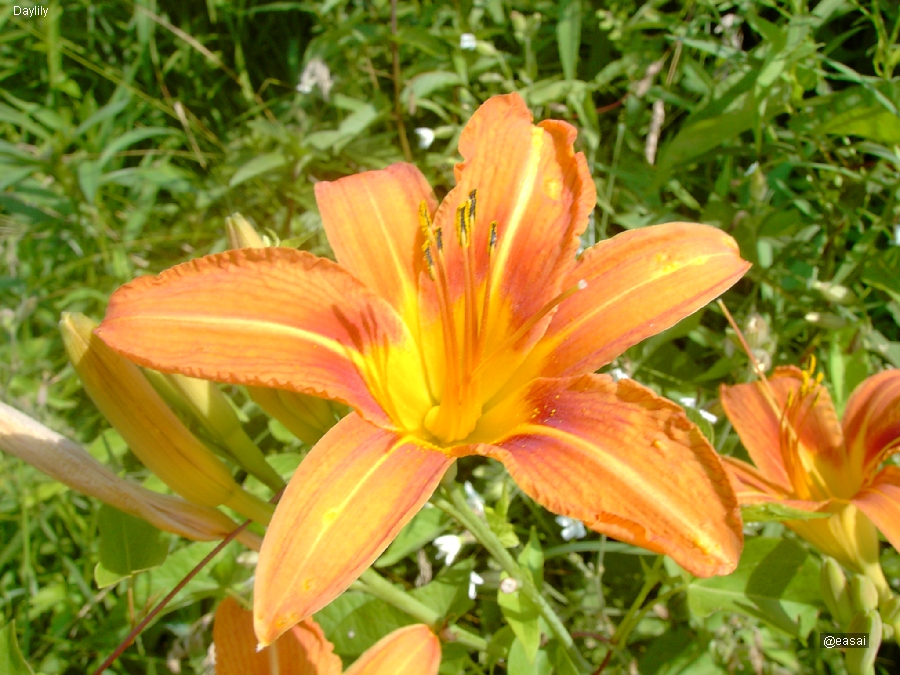
Lilium sp. family: Liliaceae Daylily (Hemerocallis fulva, family: Hemerocallidaceae)
Above are Hemerocallis fulva flowers. Hemerocallidaceae flowers differs from Liliaceae flowers in the morphology of the peranth. Whereas petals and sepals of Hemerocallidaceae flowers differs in their forms, Liliaceae flowers have six homogeneous tepals. Hemerocallidaceae flowers are bilaterally symmetrical (click here) whereas Lilidaceae flowers are radially symmetrical.
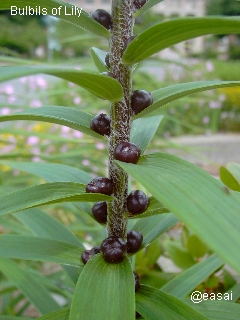
Bulbils
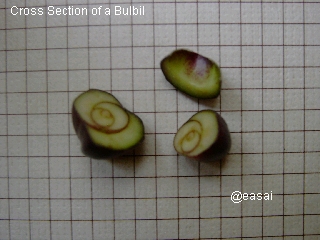
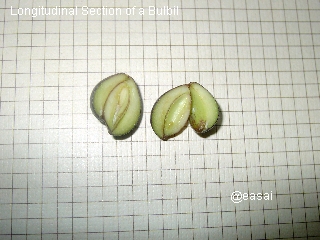
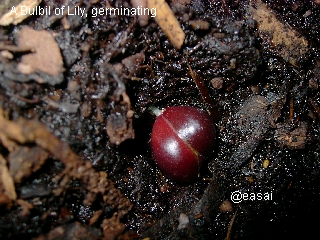
Shown in the photo are bulbils of Lilium. These small bulbils grow into plants when conditions are met. Click here for longitudinal section of a bulbil. Click here for cross section of a bulbil. The scales are in 3 mm.
BulbilsBulbils, cross sectionMilkweed follicle, vertical sectionBulbil, germinating July 2003, Amherst, MA